

March 18, 2026
The first thing I notice is the lack of traffic as we cross Kyiv’s ring road. On previous trips the cars have basically been ‘nose to tail’, this time the volume is much reduced. The city’s mayor has suggested that up to 600,00 people have fled the city, the catalyst being an increase in Russian aerial attacks and the lack of power during this savage winter. My travel companion is Jamie Fraser, a very old friend and former soldier. We drive into the city on a beautiful sunny February early afternoon, the temperature is still well below freezing and in two days’ time it will drop to -18. This has been the harshest winter Ukraine has experienced for over 20 years - maybe Putin really is the god that many Russians still think he is, as this winter has been a useful weapon to inflict even more misery on the gallant and defiant Ukrainians.
It’s been seven hours since we left our hotel in Lviv and, bar a short detour to see an isolated castle off the road, we have been heading east through flat snow-covered fields. Northamptonshire seems an age away. Our Mercedes freezer van has behaved beautifully, loaded up with a multitude of items. The van has been donated by Bidfood (from its subsidiary Oliver Kay) and it's the second van that this brilliant company has given me. Their continued support for Ukraine is further demonstrated by the fact that Jim Goldie, my contact and key supporter, is headed for Kramatorsk in May to deliver more food to the besieged area. This is my sixth trip to Ukraine, and the fourth freezer van I have driven out. This van, like the others, will be given to the Army to be used to transport fallen soldiers but for now it is full of an assortment of essential supplies.
I have known Jamie Fraser since we both lined up as raw recruits to be bellowed out by the then terrifying figure of Sgt Joe Farrell, Scots Guards on Brigade Squad at the Guards Depot in 1979. Jamie has managed to raise over £12,000 and the money raised has kitted out the van with winter tyres, paid for a thorough service and enabled us to fill it with supplies. We are carrying specialist medical rehabilitation equipment and vehicle spares for the Mercy & Health Foundation as well as 20 bags of warm clothes and blankets, hand warmers, vitamins, dried food, a mobility scooter, 8 wheelchairs and over 100 kg of dog food. For many soldiers on the front-line, dogs are an essential companion and they need to be fed! Amongst the spares are parts for an armoured Mercedes Vario. In a previous life this was a ‘cash in transit van’ in Liverpool and it is now used to take medics and volunteers to the Kherson area. The drone threat near that city is so great that it’s now too dangerous for the Mercy & Health Foundation to use their ambulances.
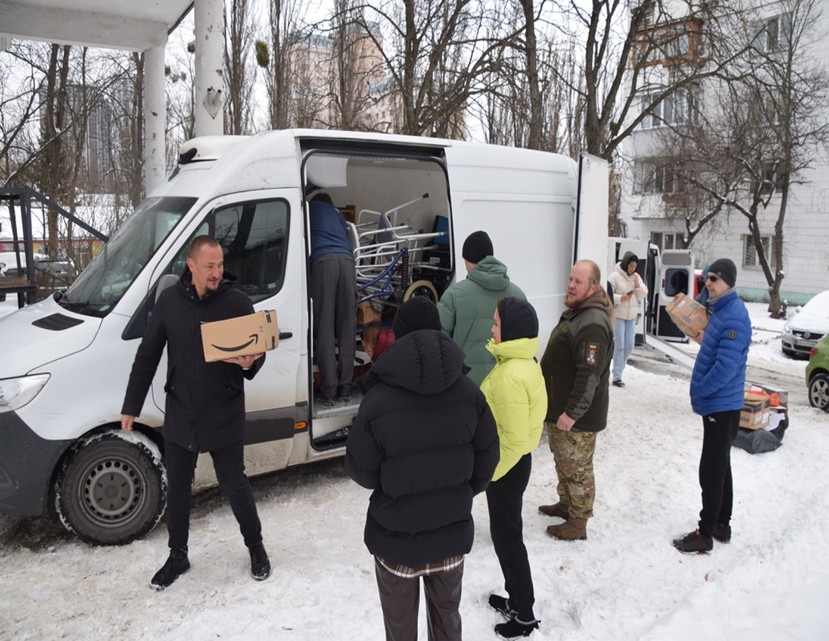
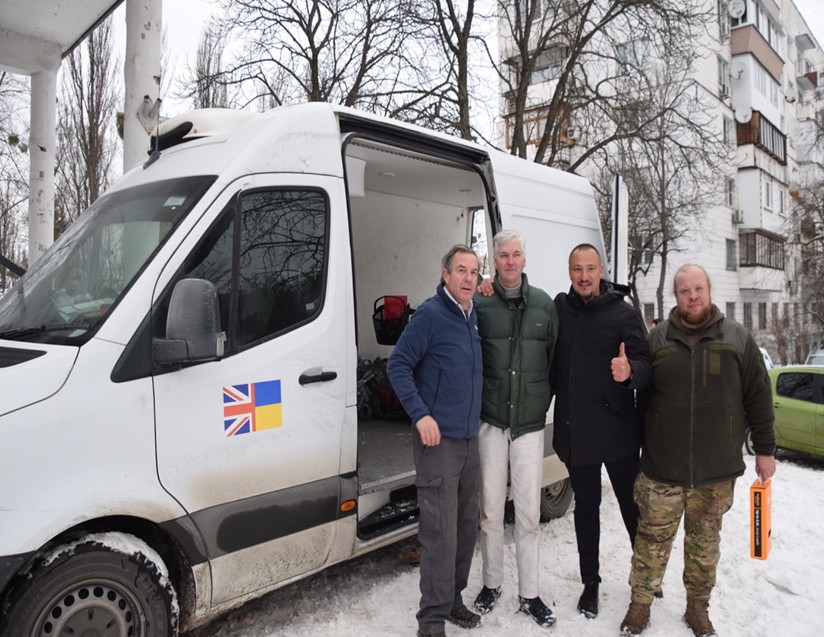
The journey from home has taken four days and, aside from the inevitable delays at Polish customs, it’s been unremarkable. Day two from Dortmund to Gliwice was the worst - it’s always depressing to glance at Apple maps on leaving the hotel to be told it's a mere 925km to our destination! Now in Kyiv, after two attempts to climb the slight snowy incline outside the Mercy and Health Foundation’s warehouse, we are met by 10 happy and familiar faces keen to welcome us and our much-needed cargo.
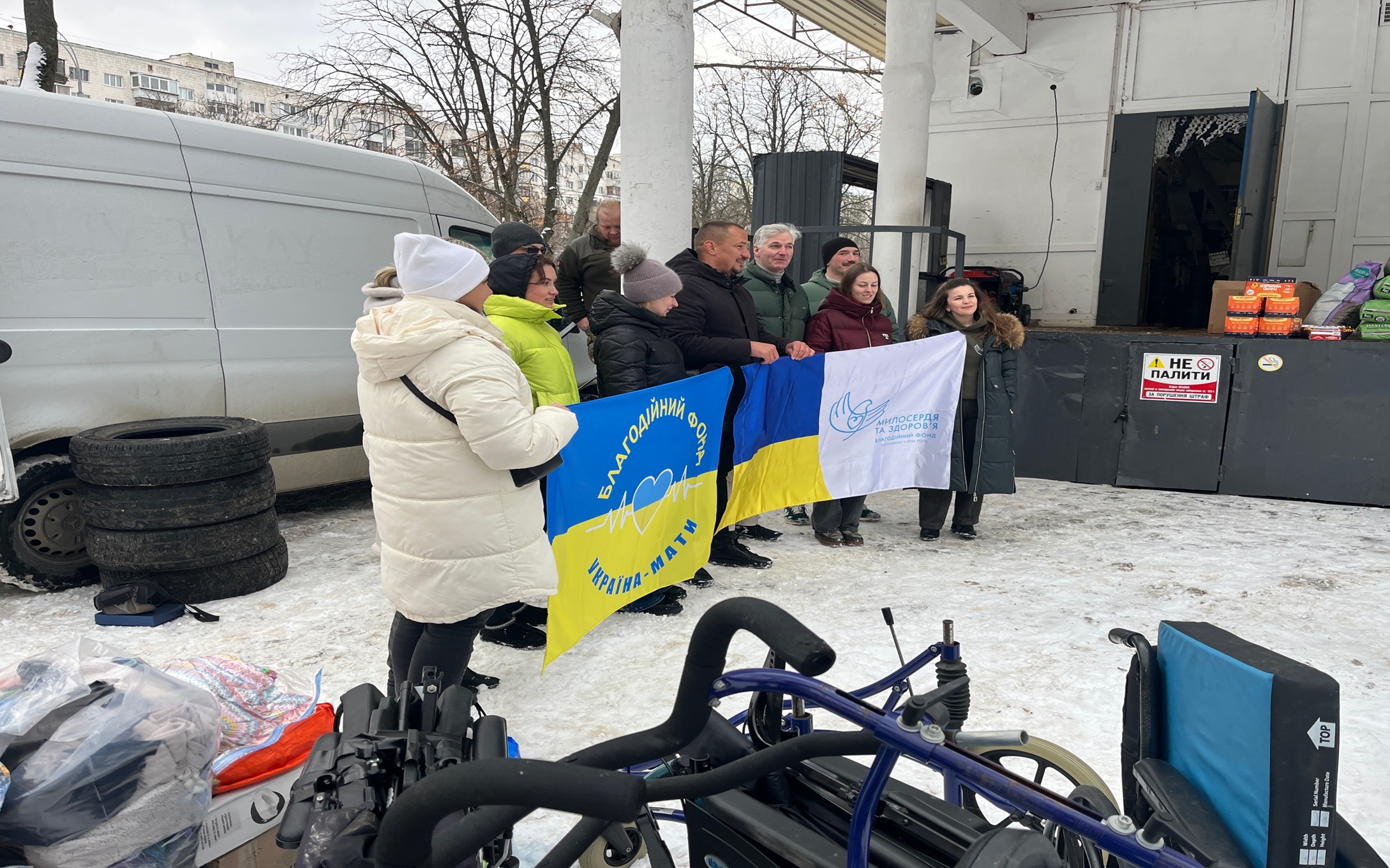
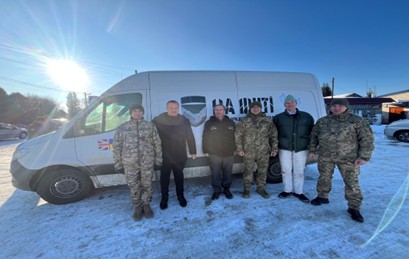
Dr Oleksandr Yatsyna provides Jamie with a tour of the Foundation’s warehouse and then, having unloaded the van, we were on our way out to dinner in the city centre. The city is cold and dark as much of the power is off, with some districts only getting four hours of power a day. On most city centre streets there are large stand-alone generators; our hosts vehemently added noisy to cold and dark as adjectives to describe their city. The next day we are up at 5am and head back west before turning north to meet the army in a small town north of Rivne, about 30 km south of the Belarus border. Whilst the freezer van is destined to be used in the Kharkiv area, the brigade headquarters is in this area and so the commander has designated it as our meeting point. Prior to the handover of the vehicle, Jamie and I are given a private tour of Ostroh university, a much-vaunted academic establishment. General Zaluzhnyi, the previous commander of the army and now Ukraine’s ambassador to London studied here. An hour later, we arrive in a snow-laden main square with presentation tables set up below a large metal Trident. Sometime later, Oleksander appears with the freezer van, now adorned with the brigade and Mercy & Health Foundation logos. As is the custom, we are laden with plaques, flags and shoulder emblems and if that was not enough gratitude we are put up in a local hotel and have a very interesting dinner with the army. The brigade commander is also responsible for the repatriation of bodies across a number of military districts, and he depressingly tells us that he needs a minimum of six more freezer vans to cope with the number of the ‘fallen heroes’.
On a beautiful third day, we head back to Kyiv and visit the Mercy & Health Foundation rehabilitation centres. Two items of specialist rehabilitation equipment that we transported from the UK, the Concept 2 trainer and the Chattanooga mobile combo, are already in use: the Ukrainians don’t hang around. And the large TV donated by Steven Challen’s Towcester volunteers is now mounted on the wall of the newly acquired second rehabilitation centre. We walk to lunch beside the partly frozen Dnieper River. It’s a Saturday, families are out walking and children are sledging down a small bank in the February sunshine, but the wailing of yet another air raid siren is a reminder that the conflict is about to enter its fourth year. There is just enough time to meet Richard Pendlebury and Jamie Wiseman from the Daily Mail for a drink before we board our sleeper train back to the Polish border. Richard & Jamie are here to cover the anniversary; I wonder if they will back for a fifth anniversary next year.
Jamie and I are hugely grateful for all those who sponsored this trip. Some of those donating for the third or fourth time, truly understanding the devasting consequences of the war. And finally, thank you to Bidfood for the Mercedes Sprinter freezer van – it was a gem and hopefully it can help provide some dignity for the families who receive the bodies of their dead loved ones. All too grim.
Charlie McGrath
Director and Founder Objective Travel Safety
March 2026